
How Can You Start an AI Career Without a Degree?
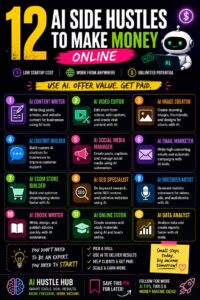
Artificial intelligence is creating new career opportunities across technology, business, marketing, finance, healthcare, education, and many other industries. As interest in AI continues to grow, many people wonder whether they need a university degree to start working in the field.
The answer depends on the type of AI career you want to pursue. Some advanced technical positions may require a strong academic background, particularly roles involving research, advanced mathematics, or specialized machine learning. However, there are also AI-related careers where practical skills, projects, certifications, experience, and a strong portfolio can be important.
If you do not have a degree, you can still begin building relevant skills and exploring AI career opportunities. The key is to choose a realistic career path, develop practical abilities, demonstrate what you can do, and continue learning.
1. Understand the Different AI Careers
The first step is understanding that “AI career” does not refer to one specific job.
AI-related roles can include:
- AI engineer
- Machine learning engineer
- Data analyst
- Data scientist
- AI product specialist
- AI automation specialist
- AI consultant
- AI content specialist
- AI operations professional
- Prompt-focused roles
- AI-focused marketing roles
Some of these positions are highly technical, while others combine AI with business or creative skills.
Understanding the differences can help you choose a career path that matches your interests and current abilities.
2. Choose a Career Path
Trying to learn every AI skill at once can be overwhelming.
Instead, choose one direction.
If you enjoy programming and mathematics, you might explore machine learning or AI engineering.
If you enjoy business, you could explore AI implementation, automation, or AI product-related work.
If you have a background in writing or marketing, you could explore AI-assisted content, marketing automation, or AI-focused communications.
Choosing a direction gives you a clearer learning goal.
3. Learn the Fundamentals
You do not need to start with advanced AI concepts.
Begin with the fundamentals.
Learn what artificial intelligence is and understand basic concepts such as machine learning, generative AI, neural networks, automation, datasets, and AI models.
If you want to enter a technical AI career, gradually add mathematics, statistics, programming, and computer science concepts.
If you want a less technical AI career, focus more on understanding how AI tools work and how organizations can use them effectively.
4. Learn Programming if You Want a Technical Role
Programming can be particularly useful for technical AI careers.
Python is widely used in data science and machine learning, making it a practical language to learn.
Start with basic concepts such as:
- Variables
- Functions
- Loops
- Data structures
- Conditional statements
- File handling
- Basic object-oriented programming
Once you understand the fundamentals, you can move into libraries and tools used for data analysis and machine learning.
Do not rush into advanced AI frameworks before you understand basic programming.
5. Learn Mathematics and Statistics
Mathematics becomes more important as you move toward technical AI roles.
Useful areas include:
- Algebra
- Probability
- Statistics
- Linear algebra
- Basic calculus
You do not necessarily need to master everything immediately.
Start with concepts relevant to your chosen career path and gradually increase your knowledge.
6. Use Online Learning Resources
There are many ways to learn AI outside traditional university programs.
Online courses, tutorials, documentation, books, educational videos, coding platforms, and practical projects can all contribute to your education.
Choose resources that match your current level.
For example, a complete beginner should start with introductory material rather than an advanced machine learning course.
Create a learning schedule and work through the material consistently.
7. Build Practical Projects
One of the best ways to demonstrate your abilities is through projects.
Projects allow you to turn theoretical knowledge into practical experience.
For example, you could build:
- A simple chatbot
- A data-analysis project
- A recommendation system
- A text-classification project
- An AI-powered productivity tool
- A small machine-learning application
If you are pursuing a less technical AI career, you could create projects demonstrating AI-assisted marketing, workflow automation, research, or content systems.
Your projects should accurately represent your abilities.
8. Create an AI Portfolio
A portfolio can help demonstrate what you have learned.
For each project, explain:
- What problem you were solving
- What tools you used
- What you personally contributed
- How the system works
- What challenges you encountered
- What you learned
A portfolio is more useful when it shows your process rather than simply displaying a finished result.
If AI tools helped you build a project, be transparent about how they were used.
9. Learn How to Use AI Tools
You should become comfortable using modern AI tools relevant to your career.
Learn how to write effective prompts, evaluate AI outputs, organize information, automate tasks, and verify AI-generated content.
For technical careers, this may include AI-assisted programming tools.
For business careers, it may involve AI-powered research, productivity, analytics, and automation tools.
The specific tools will change over time, so focus on transferable skills rather than learning only one product.
10. Develop Strong Problem-Solving Skills
Employers need people who can solve problems, not simply operate AI tools.
Practice identifying a problem, understanding its causes, developing possible solutions, testing them, and improving the results.
For example, instead of creating an AI project simply because it sounds interesting, identify a practical problem and build something that addresses it.
This demonstrates useful thinking beyond tool usage.
11. Gain Experience Through Small Projects
You do not need to wait for a full-time AI job before gaining experience.
You can work on personal projects, volunteer projects, freelance assignments, open-source contributions, or small business projects.
These experiences can help you develop practical skills and create portfolio material.
Make sure you represent your experience honestly.
12. Consider Certifications Carefully
Certifications can help demonstrate that you have completed structured training.
However, a certificate by itself does not necessarily demonstrate that you can perform a job.
When choosing a certification, consider whether it teaches practical skills and whether it is relevant to the type of role you want.
A combination of learning, projects, and demonstrated ability can provide a stronger picture of your capabilities.
13. Network With People in AI
Networking can help you learn about the industry and discover opportunities.
You can participate in professional communities, online discussions, technology events, workshops, conferences, and open-source projects.
Ask questions, share your projects, and learn from people already working in the field.
Networking should focus on building genuine professional relationships rather than simply asking people for jobs.
14. Apply for Entry-Level and Related Roles
Your first job does not necessarily have to be titled “AI Engineer.”
You might begin in a related position that allows you to develop relevant experience.
For example, depending on your skills, you might explore roles involving data, software development, automation, technical support, digital marketing, or business operations.
You can continue building AI expertise while gaining professional experience.
15. Keep Learning
AI is changing quickly.
New models, tools, techniques, and applications continue to appear.
A successful AI career therefore requires continuous learning.
Follow reliable educational resources, read technical documentation, work on projects, and regularly review the skills employers are requesting in current job listings.
You do not need to learn every new AI tool. Focus on skills that support your career direction.
16. Be Honest About Your Qualifications
If you do not have a degree, do not attempt to hide or misrepresent your educational background.
Instead, focus on what you can demonstrate.
Your portfolio, projects, skills, practical experience, certifications, and ability to solve problems can provide evidence of your capabilities.
Some employers will have formal education requirements, while others may place greater emphasis on demonstrated skills and experience. Always check the requirements of individual positions.
Final Thoughts
Starting an AI career without a degree is possible, but the path depends heavily on the type of AI work you want to pursue.
Begin by choosing a career direction, learning the appropriate fundamentals, developing practical skills, and building projects that demonstrate what you can do.
For technical roles, programming, mathematics, statistics, data skills, and machine learning knowledge may be important. For business-focused AI roles, communication, automation, research, problem-solving, and industry expertise can be valuable.
A degree is only one possible way to develop knowledge. Without one, you may need to be especially deliberate about demonstrating your abilities through projects, portfolios, practical experience, and continuous learning.
The most important step is to start learning, build something practical, and keep improving. An AI career is a long-term journey, and consistent skill development can help you prepare for opportunities as your experience grows.