
How Can AI Help You Start a Side Hustle?
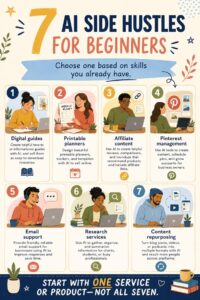
Starting a side hustle can be an exciting way to develop new skills, explore a business idea, or create an additional source of income. However, getting started can also feel overwhelming. You may need to choose an idea, understand your target audience, create a service or product, market your work, communicate with customers, and manage your time.
Artificial intelligence can help make some of these tasks easier. AI tools can support brainstorming, research, content creation, planning, customer communication, and other activities involved in starting a side hustle.
AI does not guarantee that a side hustle will become successful or profitable. The results depend on factors such as demand, skills, competition, pricing, consistency, and the quality of what you offer. However, when used responsibly, AI can help you move from an idea to a practical plan more efficiently.
1. Find Side Hustle Ideas
The first step is deciding what type of side hustle you want to start.
AI can help you brainstorm ideas based on your existing skills, interests, experience, and available time.
For example, someone with writing skills might explore freelance writing, editing, blogging, or content services. Someone with design experience might consider graphic design, presentation design, or digital products.
The goal is not to accept every suggestion AI provides. Instead, use it to generate possibilities that you can research further.
2. Match Your Skills With Opportunities
A good side hustle often starts with something you already know how to do.
AI can help you list your existing skills and identify ways they could be turned into services or products.
For example, if you are good at organizing information, you might explore virtual assistance, research services, or administrative support.
If you are comfortable with social media, you might investigate social media management or content creation.
Understanding your existing strengths can help you choose a side hustle that is realistic for you.
3. Research Your Target Market
Before investing significant time or money into a side hustle, research whether people actually need what you plan to offer.
AI can help you organize research questions about your potential customers, competitors, industry, and market.
You can investigate questions such as:
- Who might buy this service?
- What problem does it solve?
- What alternatives already exist?
- What do customers value?
- What skills are required?
- How are similar services marketed?
AI can help organize your research, but important market information should be verified using reliable sources and real-world evidence.
4. Identify a Specific Problem to Solve
Successful side hustles often solve a specific problem.
Instead of asking only, “What can I sell?” consider asking, “What problem can I help someone solve?”
For example, rather than offering general writing services, you might focus on blog content for small businesses.
Rather than offering general design, you might focus on social media graphics for local businesses.
AI can help you brainstorm specific problems and possible solutions.
5. Create a Simple Business Plan
You do not need a complicated business plan to start a small side hustle.
AI can help organize your basic plan around questions such as:
- What will I offer?
- Who are my customers?
- How will customers find me?
- What will I charge?
- What tools will I need?
- How much time can I dedicate?
- What are my expected costs?
Writing these details down can help turn a general idea into an actionable plan.
6. Create Your Brand
A side hustle may need a name, description, logo, social media profile, or website.
AI can help brainstorm business names, slogans, brand descriptions, content ideas, and website copy.
However, check whether your chosen business name is already being used and make sure your branding does not infringe on someone else’s intellectual property.
Your brand should clearly communicate what you offer and who you serve.
7. Build a Simple Online Presence
An online presence can make it easier for potential customers to learn about your side hustle.
Depending on the type of business, this might include a website, portfolio, social media account, freelance profile, or online marketplace listing.
AI can help draft descriptions of your services, frequently asked questions, introductory posts, and other basic content.
Always review the content before publishing it.
8. Create Marketing Content
Marketing is important for attracting potential customers.
AI can help you brainstorm social media posts, blog topics, email ideas, video concepts, and promotional messages.
For example, a freelance fitness content creator might create educational posts about workout planning. A web designer might publish tips about improving business websites.
Useful educational content can demonstrate your knowledge and help people understand the value of your services.
9. Write Product and Service Descriptions
If you sell products or services, clear descriptions can help potential customers understand what they are getting.
AI can help you organize information about features, benefits, pricing, and delivery.
For example, if you sell a digital template, AI can help create a description explaining who the template is for and how it can be used.
Make sure every claim is accurate.
10. Create a Portfolio
A portfolio can be especially useful for service-based side hustles.
If you do not have paying clients yet, you can create sample projects that demonstrate your abilities.
AI can help brainstorm portfolio project ideas and organize descriptions of your work.
For example, an aspiring social media manager could create a sample content calendar for a fictional business.
The portfolio should clearly identify sample or practice work rather than presenting it as client work.
11. Improve Customer Communication
Once you start receiving inquiries, communication becomes important.
AI can help draft responses to common questions, organize information, and improve the clarity of customer messages.
For example, you can create a basic response explaining your services, turnaround times, payment terms, or revision policy.
However, customer communication should remain accurate and personal.
12. Manage Your Time
A side hustle needs to fit around your existing responsibilities.
AI can help you organize tasks and create a weekly schedule.
You might divide your available time between:
- Finding customers
- Marketing
- Completing orders
- Learning
- Administration
- Customer communication
A realistic schedule can help prevent your side hustle from becoming overwhelming.
13. Automate Repetitive Tasks
Some side hustles involve repetitive administrative work.
Depending on the tools you use, AI and automation can assist with tasks such as organizing information, drafting routine messages, scheduling content, and managing workflows.
Automation should be used carefully. Important customer information and business decisions should still receive appropriate human oversight.
14. Learn New Skills
AI can also help you develop the skills needed for your side hustle.
You can use AI to explain concepts, create practice exercises, provide examples, and help you understand unfamiliar tools.
For example, someone starting a digital marketing side hustle might use AI to learn about SEO, content strategy, analytics, and advertising.
Practical experience should remain an important part of the learning process.
15. Test Your Idea Before Investing Heavily
One of the smartest ways to approach a new side hustle is to test the idea on a small scale.
Instead of spending a lot of money immediately, start with a simple version of your product or service.
AI can help you plan a small test, create promotional content, and organize feedback.
Customer responses can then help you determine what needs to be improved.
16. Track Your Results
Once your side hustle begins, track important information.
Depending on the business, you might monitor:
- Number of inquiries
- Number of customers
- Revenue
- Expenses
- Repeat customers
- Marketing results
- Time spent on projects
AI can help organize and analyze this information, but you should verify calculations and keep proper financial records.
17. Keep Your Expectations Realistic
AI can make starting a side hustle easier, but it cannot remove the work required to build a business.
You may need to spend time learning, finding customers, improving your service, handling rejection, solving problems, and building trust.
Be cautious about claims that AI can produce effortless or guaranteed income.
A sustainable side hustle usually requires patience and consistent effort.
Final Thoughts
AI can be a useful assistant when starting a side hustle. It can help you brainstorm ideas, research markets, identify customer problems, create business plans, develop marketing content, build portfolios, communicate with customers, and organize your time.
However, AI should support your work rather than replace your judgment.
Start with a realistic idea that matches your skills and available time. Research your market, test your idea on a small scale, listen to customer feedback, and improve your offering over time.
When combined with practical skills, creativity, consistency, and responsible planning, AI can help turn a side-hustle idea into a more organized and manageable project.