
How Can Students Prepare for AI Careers?
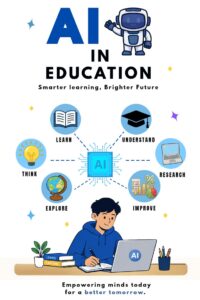
Artificial intelligence is becoming an important part of many industries, creating new opportunities for people with technical, business, creative, and analytical skills. For students thinking about their future careers, learning about AI can be a valuable way to prepare for changes in the workplace.
Students do not need to become AI experts immediately. Preparing for an AI career is a gradual process that involves developing foundational knowledge, learning useful technical skills, building projects, improving communication, and gaining practical experience.
Whether a student is interested in becoming an AI engineer, data scientist, software developer, marketer, entrepreneur, or another type of professional, understanding how AI works and how it is being used can provide a useful foundation.
1. Learn the Basics of Artificial Intelligence
The first step is developing basic AI literacy.
Students should learn what artificial intelligence means and understand concepts such as machine learning, generative AI, neural networks, automation, data, and AI models.
Understanding the basic terminology makes it easier to follow developments in the field.
Students should also learn about AI’s limitations. AI systems can produce incorrect information, so understanding how to evaluate their outputs is an important skill.
2. Identify Your Career Interests
AI is not limited to one career.
A student interested in mathematics and programming might explore machine learning or data science.
Someone interested in business could explore AI product management, automation, or business analytics.
A student interested in communication might explore AI-assisted marketing or content development.
Understanding your interests can help you choose which AI skills deserve the most attention.
3. Learn Programming
Programming can be particularly valuable for students who want technical AI careers.
Python is commonly used in data analysis and machine learning, making it a practical language to learn.
Start with basic programming concepts such as:
- Variables
- Functions
- Loops
- Conditions
- Lists and dictionaries
- File handling
- Basic algorithms
Once you understand the fundamentals, you can begin exploring data science and machine learning libraries.
Do not worry about learning everything at once. Consistent practice is more important than rushing through advanced topics.
4. Strengthen Mathematics and Statistics
Mathematics plays an important role in many technical AI careers.
Students interested in machine learning should consider developing knowledge of algebra, probability, statistics, linear algebra, and eventually calculus.
Statistics is particularly useful for understanding data and evaluating models.
Students do not necessarily need to master advanced mathematics before starting AI. Begin with foundational concepts and gradually build your knowledge.
5. Learn Data Skills
AI depends heavily on data.
Students should learn how data is collected, organized, analyzed, and visualized.
Basic spreadsheet skills can provide a useful starting point.
Students interested in technical careers can later learn SQL, Python-based data analysis, databases, and data visualization tools.
Understanding data can benefit students even if they eventually choose a non-technical AI career.
6. Practice Using AI Tools
Students should learn how to use AI tools responsibly.
AI can help with brainstorming, explanations, research, writing assistance, coding practice, and learning.
For example, a student learning programming could ask an AI tool to explain a difficult concept or provide practice exercises.
However, students should avoid using AI simply to complete assignments without understanding the material.
The goal should be to use AI as a learning assistant rather than a replacement for learning.
7. Learn Prompt Writing
Prompt writing is the ability to provide clear instructions to an AI system.
Students can improve their results by learning how to provide context, explain the task, specify the desired format, and ask follow-up questions.
For example, instead of asking an AI tool to “explain machine learning,” a student could ask for a beginner-friendly explanation with a practical example and a short quiz.
Learning to communicate clearly with AI can become useful in many professional settings.
8. Build Personal Projects
Projects are one of the best ways to turn knowledge into practical experience.
Students can build projects based on their interests.
Examples include:
- A simple chatbot
- A data-analysis project
- A recommendation system
- A machine-learning model
- An AI-powered study assistant
- A simple website using AI features
- An automated productivity workflow
Students do not need to build extremely complicated systems.
A small project that demonstrates genuine understanding can be more useful than a large project that the student cannot explain.
9. Create a Portfolio
Students can document their projects in an online portfolio.
Each project should explain the problem, the tools used, the student’s contribution, and what was learned.
A portfolio can demonstrate practical skills that may not be obvious from grades or a resume.
Students should also be transparent about where AI tools were used.
10. Participate in Competitions and Hackathons
Competitions, coding challenges, and hackathons can provide opportunities to practice technical skills.
They can also teach students how to work under deadlines and collaborate with others.
Even when students do not win, these experiences can provide practical lessons and portfolio projects.
Look for opportunities through schools, universities, technology communities, and online platforms.
11. Join Technology Communities
Learning does not have to happen alone.
Students can join technology clubs, coding communities, AI groups, online forums, workshops, and professional events.
Being part of a community can provide opportunities to ask questions, learn from others, collaborate on projects, and discover new resources.
Networking can also help students understand what different technology careers actually involve.
12. Look for Internships and Practical Experience
Internships can provide valuable exposure to professional environments.
Students should look for opportunities related to AI, software development, data, analytics, technology, marketing, or other areas connected to their career goals.
If a direct AI internship is not available, a related technical or business internship can still provide useful experience.
Practical experience can help students understand workplace expectations and identify skills they need to develop.
13. Develop Communication Skills
Technical knowledge is only one part of career preparation.
AI professionals also need to communicate ideas clearly.
Students should practice writing, presentations, teamwork, listening, and explaining technical concepts to people without technical backgrounds.
Being able to explain how a project works can be just as important as building it.
14. Develop Critical Thinking
AI can produce impressive-looking answers, but those answers are not always correct.
Students should learn to question AI-generated information.
Check important claims, compare sources, test code, examine assumptions, and look for potential errors.
Critical thinking is especially important for students because relying too heavily on AI without understanding the underlying material can weaken learning.
15. Learn About AI Ethics
Students preparing for AI careers should understand responsible technology use.
Important topics include:
- Privacy
- Bias
- Security
- Misinformation
- Intellectual property
- Data protection
- Responsible automation
- Human oversight
Understanding these issues can help future professionals build and use AI more responsibly.
16. Keep Up With Industry Developments
AI changes quickly.
Students should follow reliable technology publications, educational resources, research developments, and current job descriptions.
Pay attention to the skills employers are requesting.
However, students should avoid trying to learn every new AI tool. Focus on fundamental skills that remain useful even as specific technologies change.
17. Build a Professional Online Presence
Students can begin developing a professional presence before graduating.
A simple portfolio website, professional profile, or project repository can showcase their work.
Students can share projects, learning experiences, and useful insights.
The goal is not to appear like an expert immediately. Instead, demonstrate curiosity, consistent learning, and genuine work.
18. Do Not Ignore Human Skills
AI careers still require human abilities.
Students should develop creativity, teamwork, adaptability, leadership, communication, and problem-solving.
Technology changes quickly, but these skills can remain valuable across different careers.
Combining technical knowledge with strong human skills can help students adapt to different professional environments.
A Simple AI Career Roadmap for Students
Students can approach their preparation in stages.
Stage 1: Learn AI fundamentals.
Stage 2: Identify a career direction.
Stage 3: Develop relevant technical or professional skills.
Stage 4: Build small projects.
Stage 5: Create a portfolio.
Stage 6: Join communities and network.
Stage 7: Seek internships or practical experience.
Stage 8: Continue learning and improving.
This process does not need to happen overnight. Career development takes time.
Final Thoughts
Students can prepare for AI careers by developing a combination of technical knowledge, practical experience, professional skills, and responsible AI habits.
Start by learning the fundamentals of artificial intelligence and identifying the career areas that interest you. Then develop relevant skills such as programming, data analysis, prompt writing, automation, or AI-assisted workflows.
Most importantly, build projects that demonstrate what you can actually do.
AI is changing quickly, so students should focus not only on specific tools but also on learning how to learn, solve problems, evaluate information, and adapt to new technologies.
By combining AI knowledge with communication, creativity, critical thinking, and practical experience, students can build a strong foundation for a wide range of future career opportunities.