
Can AI Help You Find a Better Job?

Finding a better job can take time and effort. From searching through job listings to preparing a resume, writing applications, and practicing for interviews, the process can feel overwhelming. Artificial intelligence (AI) is changing the way people approach many of these tasks.
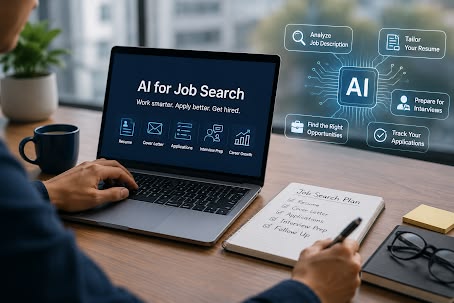
AI cannot guarantee that you will get a job, but it can help make your job search more organized, efficient, and personalized. When used properly, AI can help you identify opportunities, improve your application materials, prepare for interviews, and develop skills that employers value.
How Can AI Help With a Job Search?
One of the biggest advantages of AI is its ability to process large amounts of information quickly. Job seekers can use AI-powered tools to organize job opportunities and identify positions that match their skills, experience, and career goals.
Instead of searching randomly, you can provide an AI tool with information about your education, previous experience, skills, preferred industry, and desired position. AI can then help you identify the types of jobs that may fit your background.
However, job seekers should always review job listings themselves. AI-generated recommendations can contain mistakes or misunderstand important details.
Can AI Help Improve Your Resume?
Your resume is one of the most important parts of a job application. A well-organized resume can make it easier for employers and recruiting systems to understand your qualifications.
AI can help you improve the structure, wording, and clarity of your resume. For example, you can ask an AI tool to identify unclear sentences, repetitive information, or areas where your experience could be explained more effectively.
AI can also help you customize your resume for a particular job description. If an employer is looking for skills such as project management, data analysis, communication, or customer service, AI can help you identify where those skills appear in your existing experience.
The important thing is to remain truthful. You should never allow AI to invent qualifications, degrees, work experience, or achievements that you do not have.
How Can AI Help Write a Cover Letter?
Writing a different cover letter for every job can be difficult. AI can help create a starting point based on your experience and the position you are applying for.
You can provide the job description and your relevant experience, then ask AI to create a professional draft. After that, you should personalize the letter so it sounds like you.
A good cover letter should explain why you are interested in the position and what you can contribute to the organization. Simply copying an AI-generated letter without reviewing it can make your application sound generic.
Can AI Help You Prepare for Interviews?
Interview preparation is another area where AI can be useful.
AI can act as a practice interviewer by asking questions related to a particular position. For example, someone applying for a marketing position might practice questions about campaigns, customer research, analytics, and communication.
After answering, you can ask AI to provide feedback on clarity, organization, and completeness.
You can also practice common questions such as:
- Tell me about yourself.
- Why do you want this position?
- What are your strengths?
- What is a professional challenge you have faced?
- Why should we hire you?
- Where do you see yourself in the future?
Practicing with AI does not replace real interview experience, but it can help you become more comfortable answering questions.
How Can AI Help You Discover New Career Paths?
Sometimes the problem is not finding a job but figuring out which career direction to pursue.
AI can help you explore careers based on your interests, education, skills, and experience. For example, someone with strong writing and communication skills might explore careers in content creation, marketing, public relations, technical writing, or communications.
AI can also help compare different career paths by explaining common responsibilities, required skills, and possible learning routes.
However, career decisions should not be based entirely on AI recommendations. Research employers, speak with professionals, review reliable career information, and consider your own interests and circumstances.
Can AI Help You Learn New Skills?
The job market continues to change, and employers often look for candidates with current and relevant skills.
AI can function as a learning assistant. You can ask it to explain difficult concepts, create practice exercises, generate study plans, or help you understand unfamiliar topics.
For example, someone interested in data analysis could use AI to create a learning plan covering spreadsheets, statistics, data visualization, and related tools.
Someone interested in digital marketing could use AI to learn about content strategy, search engine optimization, social media marketing, analytics, and advertising.
The key is to use AI as a learning aid rather than simply asking it to do the work for you.
How Can AI Help You Become More Productive?
AI can also help job seekers manage their time.
You can use AI to create job-search schedules, organize application information, draft follow-up messages, prepare interview questions, or summarize notes from your research.
For example, instead of spending an entire day applying randomly to different positions, you could create a structured routine:
- Search for relevant positions.
- Select jobs that match your qualifications.
- Customize your resume.
- Prepare a personalized application.
- Record the application details.
- Prepare for potential interviews.
- Follow up when appropriate.
A structured process can make your job search more consistent.
What Are the Risks of Using AI in a Job Search?
Although AI can be helpful, it has limitations.
AI tools can sometimes produce incorrect information, misunderstand a job description, or generate language that does not accurately represent your experience.
There is also a risk of making your application sound too generic. If hundreds of applicants use similar AI-generated language, applications may begin to look alike.
Privacy is another consideration. Job seekers should be careful about entering sensitive personal information into AI systems. Avoid sharing unnecessary financial information, passwords, identification numbers, or other private data.
Most importantly, do not use AI to misrepresent yourself. Your resume, application, and interview responses should accurately reflect your real qualifications.
How to Use AI Effectively When Looking for a Job
The best approach is to combine AI assistance with your own judgment.
Start by clearly defining the type of job you want. Then use AI to help research career options, identify skills you may need, improve your resume, and practice interviews.
Always review AI-generated information before using it. Correct errors, remove irrelevant information, and personalize the language.
You should also continue using traditional job-search methods. Check company career pages, professional networks, reputable job boards, career events, and personal connections.
Final Thoughts
AI can become a useful tool for people looking for better career opportunities. It can help with job research, resumes, cover letters, interview preparation, career exploration, and skill development.
However, AI works best as an assistant rather than a replacement for human judgment. Your experience, personality, skills, communication, and professional relationships still matter.
If you use AI responsibly and combine it with genuine skill development and careful research, it can make your job search more organized and help you prepare more effectively for new career opportunities.