
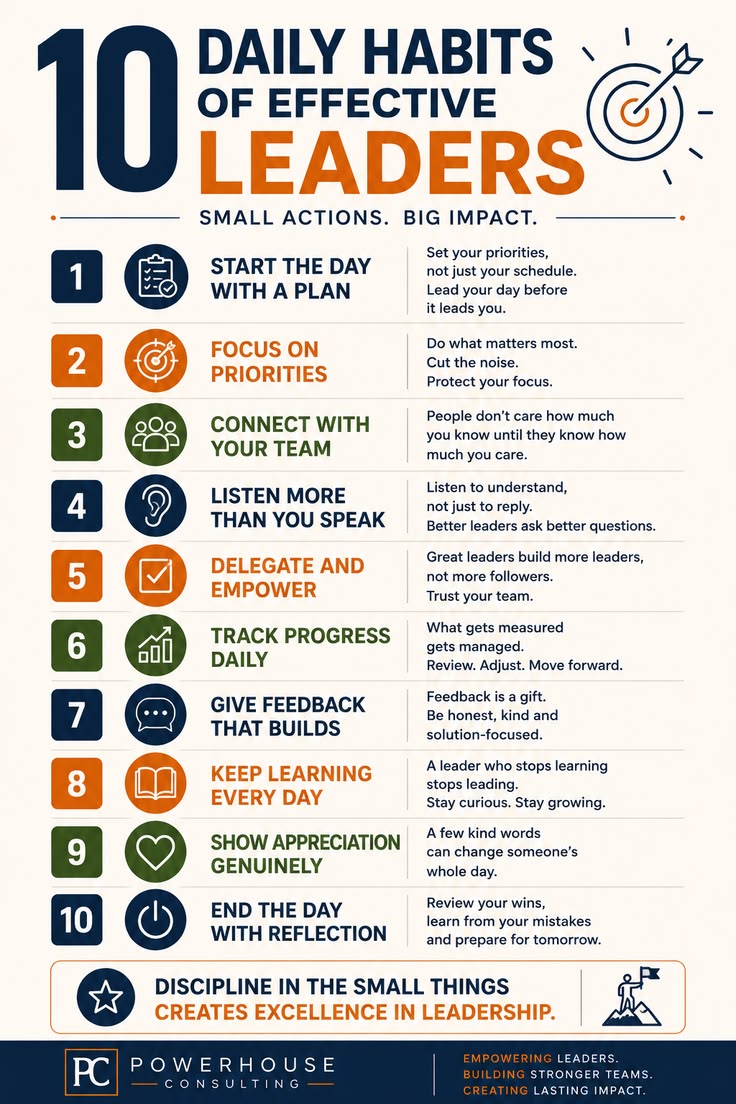
How Can You Develop Leadership Skills?
Leadership is an important skill in almost every career. Whether you are managing a team, running a business, leading a project, or simply taking responsibility for your work, strong leadership skills can help you become more effective and confident.
Leadership is not only about having a management position. It is also about communicating clearly, making responsible decisions, helping others, solving problems, and setting a positive example.
The good news is that leadership skills can be developed through practice and experience. You do not have to be a natural-born leader to become a better one.
1. Improve Your Communication Skills
Good communication is one of the foundations of effective leadership.
Leaders need to explain ideas clearly, listen to others, provide instructions, and communicate expectations. Poor communication can create confusion and disagreements within a team.
You can improve your communication by practicing active listening, speaking clearly, asking questions, and learning how to explain complicated ideas in simple language.
Written communication is also important. Emails, reports, presentations, and messages should be clear, professional, and easy to understand.
2. Learn to Listen
Leadership is not only about talking. Good leaders also listen carefully.
When team members share ideas, concerns, or suggestions, listening can help you understand different perspectives. It can also help people feel respected and included.
Practice listening without immediately interrupting or preparing your response. Ask follow-up questions when something is unclear.
Listening can also help leaders identify problems before they become bigger issues.
3. Take Responsibility
Leadership involves taking responsibility for your actions and decisions.
If you make a mistake, acknowledge it and focus on finding a solution rather than blaming someone else.
Taking responsibility can help build trust. People are more likely to respect leaders who are willing to recognize mistakes and learn from them.
You can practice this by taking ownership of your assignments, meeting deadlines, and following through on commitments.
4. Develop Problem-Solving Skills
Leaders often face unexpected problems.
Instead of becoming overwhelmed, strong leaders try to understand the problem, examine possible solutions, and decide what action should be taken.
You can improve your problem-solving skills by asking questions such as:
- What exactly is the problem?
- What caused it?
- What information do I need?
- What solutions are available?
- What could happen with each solution?
- What is the most practical next step?
Practicing this approach can help you become more confident when facing challenges.
5. Learn How to Make Decisions
Decision-making is another important leadership skill.
Some decisions are simple, while others require careful consideration. Good leaders learn how to collect relevant information, consider different options, understand potential consequences, and make decisions within a reasonable timeframe.
You do not need to have perfect information before making every decision. In many situations, leaders must make the best decision possible with the information available.
After making a decision, evaluate the result and learn from the experience.
6. Build Emotional Intelligence
Emotional intelligence involves understanding your own emotions and recognizing the emotions of other people.
This can help leaders manage workplace relationships, communicate more effectively, and handle disagreements.
For example, if a colleague is frustrated, immediately responding with criticism may make the situation worse. A leader with strong emotional awareness may first try to understand the reason for the frustration and then work toward a solution.
Developing empathy, patience, self-awareness, and emotional control can strengthen leadership abilities.
7. Learn to Delegate
Trying to do everything yourself is not effective leadership.
Delegation means giving appropriate responsibilities to other people while providing the support they need to succeed.
Effective delegation can help teams work more efficiently and give employees opportunities to develop their own skills.
When delegating, make sure the person understands the task, deadline, expected result, and available resources.
Delegation does not mean abandoning responsibility. Leaders should continue to provide guidance and monitor progress when necessary.
8. Develop Time Management Skills
Leaders often have multiple responsibilities at the same time.
Good time management can help you prioritize important tasks, meet deadlines, and reduce unnecessary stress.
Start by identifying your most important responsibilities. Create a realistic schedule and divide large projects into smaller tasks.
Learning to distinguish between urgent tasks and important tasks can also help you use your time more effectively.
A leader who manages their own time well can set a positive example for others.
9. Become a Better Team Player
Leadership and teamwork are closely connected.
Even people in management positions need to work with others. Understanding how to cooperate, share responsibilities, resolve disagreements, and support colleagues can make you a more effective leader.
Volunteer to help with group projects and learn how different people contribute to a team.
Being a good team member can also help you understand the challenges that employees experience.
10. Ask for Feedback
Feedback can reveal strengths and weaknesses that you may not notice yourself.
Ask trusted colleagues, supervisors, mentors, or team members for honest feedback about your communication, organization, decision-making, and teamwork.
Instead of becoming defensive, try to view useful feedback as an opportunity to improve.
You can also review your own performance after completing an important project. Ask yourself what went well, what could have been better, and what you would do differently next time.
11. Find a Mentor
A mentor can provide guidance based on their own experience.
Look for someone whose leadership approach you respect and who is willing to share knowledge. A mentor can help you understand workplace challenges, improve specific skills, and think about your long-term career development.
You can also learn from leaders through books, professional courses, interviews, podcasts, and educational resources.
Learning from different leadership styles can help you develop your own approach.
12. Practice Leadership Through Small Opportunities
You do not need to become a manager before you can practice leadership.
Look for opportunities to take responsibility.
You might lead a small project, organize a team activity, train a new employee, coordinate a presentation, or volunteer to solve a workplace problem.
These experiences can help you build confidence and learn how to manage responsibilities.
Start small and gradually take on more challenging responsibilities.
13. Keep Learning
Leadership development is an ongoing process.
Workplaces change, teams have different needs, and new challenges appear over time. Successful leaders continue learning rather than assuming they already know everything.
Consider taking leadership courses, reading books, attending workshops, or studying communication and management.
You can also learn from your own experiences. Every project, disagreement, success, and mistake can provide a lesson.
What Makes a Good Leader?
There is no single leadership style that works in every situation.
However, effective leaders often demonstrate qualities such as:
- Clear communication
- Responsibility
- Honesty
- Empathy
- Adaptability
- Confidence
- Problem-solving
- Decision-making
- Teamwork
- Accountability
- Willingness to learn
Different situations may require different approaches. A good leader learns how to adapt while maintaining clear values and goals.
Final Thoughts
Leadership is a skill that can be developed over time. You can become a stronger leader by improving your communication, listening carefully, taking responsibility, solving problems, making thoughtful decisions, managing your time, and learning from feedback.
You do not need to wait for a management position to begin. Every project, team activity, and workplace responsibility can provide an opportunity to practice leadership.
By consistently learning and taking responsibility, you can gradually build the skills and confidence needed to take on greater responsibilities in your career.