
How Will AI Change Entry-Level Jobs?
Artificial intelligence is changing the workplace faster than many people expected. From customer service and marketing to finance, technology, and administration, businesses are increasingly using AI tools to complete tasks, analyze information, and improve productivity. One group that could experience some of the biggest changes is entry-level workers.
Entry-level jobs have traditionally provided graduates, students, and career changers with an opportunity to gain experience and develop professional skills. As AI becomes more capable, some traditional entry-level tasks may become automated, while new opportunities may appear for workers who know how to use AI effectively.
Understanding these changes can help people prepare for the future and develop skills that remain valuable in an AI-powered workplace.
AI May Automate Routine Tasks
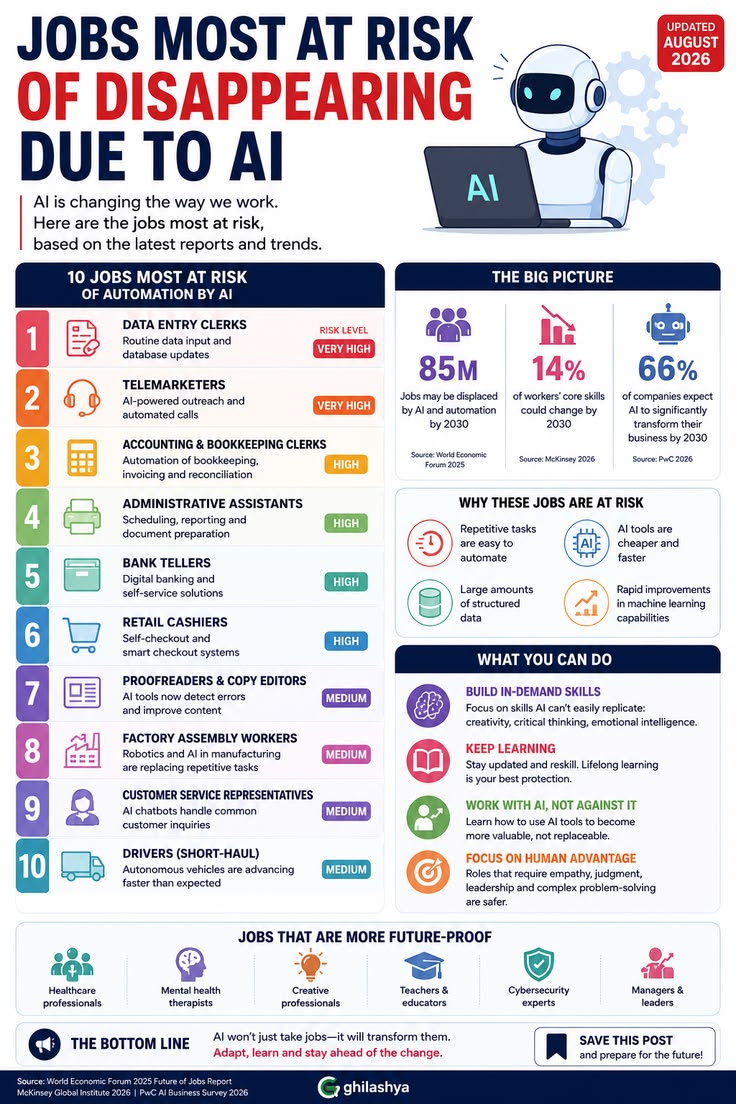
Many entry-level positions involve repetitive and predictable tasks. These can include entering information into databases, organizing documents, responding to simple customer questions, preparing basic reports, scheduling appointments, or processing routine requests.
AI can increasingly assist with these activities. For example, an AI system may summarize documents, organize information, generate basic reports, or provide answers to common customer questions.
This does not necessarily mean that entire jobs will disappear. Instead, particular tasks within those jobs may become automated. Employees may spend less time performing repetitive work and more time handling tasks that require judgment, communication, creativity, and problem-solving.
Entry-Level Workers May Need AI Skills
As businesses adopt AI tools, knowing how to use them could become an important workplace skill.
An entry-level employee may be expected to understand how to write effective prompts, review AI-generated information, identify errors, organize AI-assisted workflows, and use AI tools responsibly.
For example, a marketing assistant might use AI to generate initial content ideas but still need to edit the material, check facts, understand the target audience, and make sure the final content matches the company’s goals.
Learning how to work alongside AI could therefore become as important as learning traditional workplace software.
Some Traditional Career Paths May Change
Entry-level positions have often served as the first step toward more advanced careers. However, if AI takes over some basic tasks, the way people gain experience could change.
Consider an entry-level data analyst. In the past, a beginner might spend significant time cleaning spreadsheets and preparing basic reports. AI-powered tools can increasingly assist with some of these activities.
This could mean that junior employees are given more complex responsibilities earlier in their careers. At the same time, employers may expect new workers to arrive with stronger technical and analytical skills.
The result could be a different type of entry-level position rather than simply fewer positions.
Human Skills Will Remain Important
AI may be powerful, but workplaces still require human judgment and interaction.
Communication, teamwork, leadership, creativity, critical thinking, empathy, adaptability, and decision-making are difficult to reduce to simple automated tasks.
For example, an AI system may help a customer-service employee find information quickly, but handling an upset customer may still require patience, emotional awareness, and good communication.
Similarly, AI can generate ideas, but employees often need to decide which ideas are realistic, appropriate, and useful.
For entry-level workers, developing these human skills alongside technical abilities can provide a strong foundation for career growth.
Employers May Look for Different Qualifications
AI could also change what employers expect from people applying for entry-level positions.
Instead of focusing only on degrees or basic software knowledge, some employers may look for candidates who can demonstrate practical AI skills.
A candidate might stand out by showing how they have used AI to analyze information, automate a repetitive task, improve a workflow, create a research project, or solve a practical problem.
This makes a portfolio increasingly useful. Rather than simply saying that they understand AI, candidates can demonstrate what they can actually do with it.
AI Could Create New Entry-Level Opportunities
While AI may automate some tasks, it can also create new types of work.
Businesses need people to manage AI systems, review AI-generated content, check data quality, support AI implementation, monitor outputs, and help employees use new technologies.
New roles may also emerge as companies discover additional applications for AI.
For young professionals, this means the changing job market could contain opportunities that did not exist a few years ago.
The important point is that career opportunities may shift rather than simply disappear.
AI May Make Some Workers More Productive
One of the biggest benefits of AI for entry-level employees could be increased productivity.
A beginner can use AI as an assistant for tasks such as brainstorming, summarizing information, organizing ideas, drafting documents, or learning unfamiliar concepts.
For example, someone starting a marketing career could use AI to brainstorm campaign ideas, research potential audiences, and create a first draft of a social media plan. The employee would still need to apply professional judgment and make the final decisions.
Used correctly, AI can help new employees learn faster and complete certain tasks more efficiently.
AI Literacy Could Become a Basic Workplace Skill
Just as computer literacy became increasingly important in many careers, AI literacy may become a common workplace requirement.
AI literacy does not necessarily mean becoming a programmer or machine-learning expert. It can mean understanding what AI can do, recognizing its limitations, checking its output, protecting sensitive information, and using AI tools appropriately.
Someone working in human resources, education, sales, finance, healthcare administration, or communications could benefit from understanding how AI applies to their field.
Learning the basics early could help young professionals adapt as workplace technology continues to evolve.
Continuous Learning Will Become More Important
The development of AI is unlikely to stop. New tools, features, and applications are being introduced regularly.
This means that entry-level workers may need to develop a habit of continuous learning.
Instead of learning one set of tools and relying on them throughout an entire career, workers may need to regularly update their knowledge.
Online courses, professional training, tutorials, practical projects, and workplace experience can all help people keep their skills current.
The ability to learn and adapt may become one of the most valuable career skills in an AI-driven workplace.
How Can Entry-Level Workers Prepare?
People entering the workforce can take several practical steps to prepare for changes caused by AI.
First, learn the AI tools relevant to your chosen career. Someone interested in marketing should explore marketing and content tools, while someone interested in data should learn AI-assisted analytical tools.
Second, strengthen human skills such as communication, critical thinking, teamwork, and creativity.
Third, build practical projects that demonstrate your abilities. A portfolio can show employers that you know how to apply your knowledge rather than simply understand concepts.
Finally, stay curious. AI technology will continue to change, and being willing to learn new tools can make career development easier.
Final Thoughts
AI is likely to change entry-level jobs in significant ways. Some repetitive tasks may become automated, while employees may spend more time on analysis, creativity, communication, and decision-making.
For people starting their careers, the most important response may not be to compete directly with AI, but to learn how to work effectively with it.
The future workplace will likely require a combination of technology skills and human abilities. Workers who understand AI, think critically about its output, communicate effectively, and continue learning can be better prepared for the changing world of work.
Entry-level careers may look different in the future, but they can continue to provide valuable opportunities for people who are ready to adapt and develop the skills that modern employers need.